Why change the perspective?
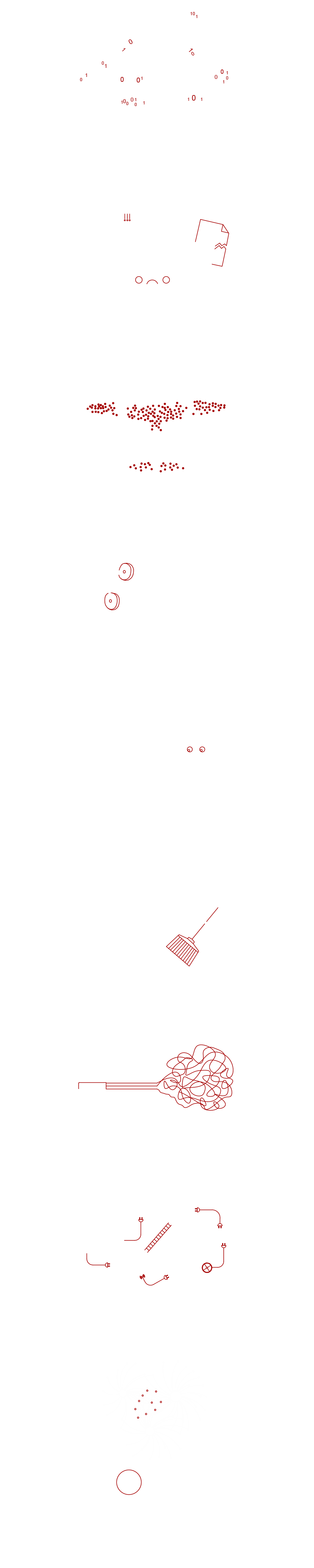
There are various obstacles in the way of the project, which can be summarized in four main topics.
There are various obstacles in the way of the project, which can be summarized in four main topics.
1- Bulk data
Sometimes our data becomes so large that we simply become the holder or carrier of information, and not only do they not solve a problem for us, but they also cause us to be distracted and drowned in ambiguity.
Sometimes our data becomes so large that we simply become the holder or carrier of information, and not only do they not solve a problem for us, but they also cause us to be distracted and drowned in ambiguity.
2- nsufficient data
Most of the time, we are faced with limited information to reach the most optimal decision, and due to this deficiency, we try to put the incomplete information together in different ways and provide a close-up image to the client’s wishes, which is not the definite client’s expected output.
Most of the time, we are faced with limited information to reach the most optimal decision, and due to this deficiency, we try to put the incomplete information together in different ways and provide a close-up image to the client’s wishes, which is not the definite client’s expected output.
4- Strengthening the mental proposition
Strengthening the proposition created in the mind makes us think that we are doing hard and exhausting work, which is part of the process. In this case, we ignore out-of-bounds suggestions that help optimize the process.
Strengthening the proposition created in the mind makes us think that we are doing hard and exhausting work, which is part of the process. In this case, we ignore out-of-bounds suggestions that help optimize the process.
3- Insist on quick decision-making
A brief reflection and act hastily in the pre-project stage will only result in not paying attention to the various dimensions of the story and enduring the rework costs during the job. The story of the crashed planes of World War II is an example of thousands of examples of this mindset.
A brief reflection and act hastily in the pre-project stage will only result in not paying attention to the various dimensions of the story and enduring the rework costs during the job. The story of the crashed planes of World War II is an example of thousands of examples of this mindset.
Change the sight angle
We need to change our sight angle and perspective to make the right choice. To do this, we need to take the four main steps as described below.
We need to change our sight angle and perspective to make the right choice. To do this, we need to take the four main steps as described below.
1-Data cleansing
It is necessary to remove or reconstruct faulty, incomplete, duplicate, and incompatible data from the obtained dataset.
It is necessary to remove or reconstruct faulty, incomplete, duplicate, and incompatible data from the obtained dataset.
2- Sorting data
Categorize and sort the cleansed data according to their subject, size, and impact.
Categorize and sort the cleansed data according to their subject, size, and impact.
3- Connection between data
Establish a meaningful and interconnected relationship between all data to obtain the proper decision-making.
Establish a meaningful and interconnected relationship between all data to obtain the proper decision-making.
4- Data visualization
Given the multiplicity of data in various shapes such as map, table, number, phrase, and image, it is necessary to make a complete, integrated, and realistic picture of the puzzle pieces to make the proper decision-making about what we are facing. The above diagram is based on the defined model, the criteria relationship with each stage and their valuation is obtained, shows the quality in horizontal axis and priority in vertical axis, and the dimensions of each circle show the size of each user.
Given the multiplicity of data in various shapes such as map, table, number, phrase, and image, it is necessary to make a complete, integrated, and realistic picture of the puzzle pieces to make the proper decision-making about what we are facing. The above diagram is based on the defined model, the criteria relationship with each stage and their valuation is obtained, shows the quality in horizontal axis and priority in vertical axis, and the dimensions of each circle show the size of each user.